If you are tracking your macros, you know the daily struggle: how do you get a massive, satisfying portion of food without blowing through your entire carbohydrate and calorie allowance by 2:00 PM?
Enter squash. Spaghetti squash being my personal favorite at the moment. This humble, yellow vegetable is the ultimate high-volume hack for healthy meal prep. It mimics the comforting texture of traditional pasta but carries a fraction of the caloric weight. If your goal is staying in a calorie deficit while keeping your protein high and your stomach full, it’s time to add this vegetable to your weekly rotation.
Here is why spaghetti squash reigns supreme for macro-friendly eating, along with tips to make it taste incredible.
The Macro Breakdown: Spaghetti Squash vs. Traditional Pasta
When I talk about "high-volume eating," I mean consuming a large physical amount of food for very few calories. Making you feel fuller, curbing that desire to go looking for snacks and blowing your plan. Look at how a single cup of cooked spaghetti squash stacks up against regular wheat pasta:
Cooked Spaghetti Squash (1 Cup) 42 Calories, 10 Grams Carbohydrate
Cooked White Pasta (1 Cup) 200 Calories Carbohydrates 40 grams
By swapping traditional noodles for spaghetti squash strands, you save roughly 160 calories and 30 grams of carbs per cup. This opens up your macro budget to use how you want. You can use the deficit itself or load up on extra lean proteins, healthy fats, or savory cheeses. Its about choosing where that budget goes for your own personal goals and taste and texture preferences.
Why It Fits Perfectly Into Your Meal Prep Strategy
Volume Satiety
Because spaghetti squash is high in water and fiber, it fills your stomach up physically. You get the psychological satisfaction of eating a giant, comforting bowl of "pasta" without the heavy, sluggish feeling that often follows a massive carb load.
The Ultimate Flavor Canvas
On its own, spaghetti squash has a very mild, slightly sweet profile. It acts like a sponge for whatever you pair with it. Whether you are craving rich Italian marinara, savory stir-fry or soething with a creamy white sauce, the squash absorbs those flavors beautifully.
It Holds Up in the Fridge
Unlike zucchini noodles (zoodles), which can bleed water and turn to mush by day three, roasted spaghetti squash strands retain their texture remarkably well. You can even store your portioned meals in airtight containers if thats your strategy, and they will reheat beautifully all week long.
2 Ways to Build a Macro-Friendly Spaghetti Squash Meal
To turn spaghetti squash into a balanced, macro-friendly masterpiece, you need to anchor it with a solid protein source. Here are three easy ways to build your bowl:
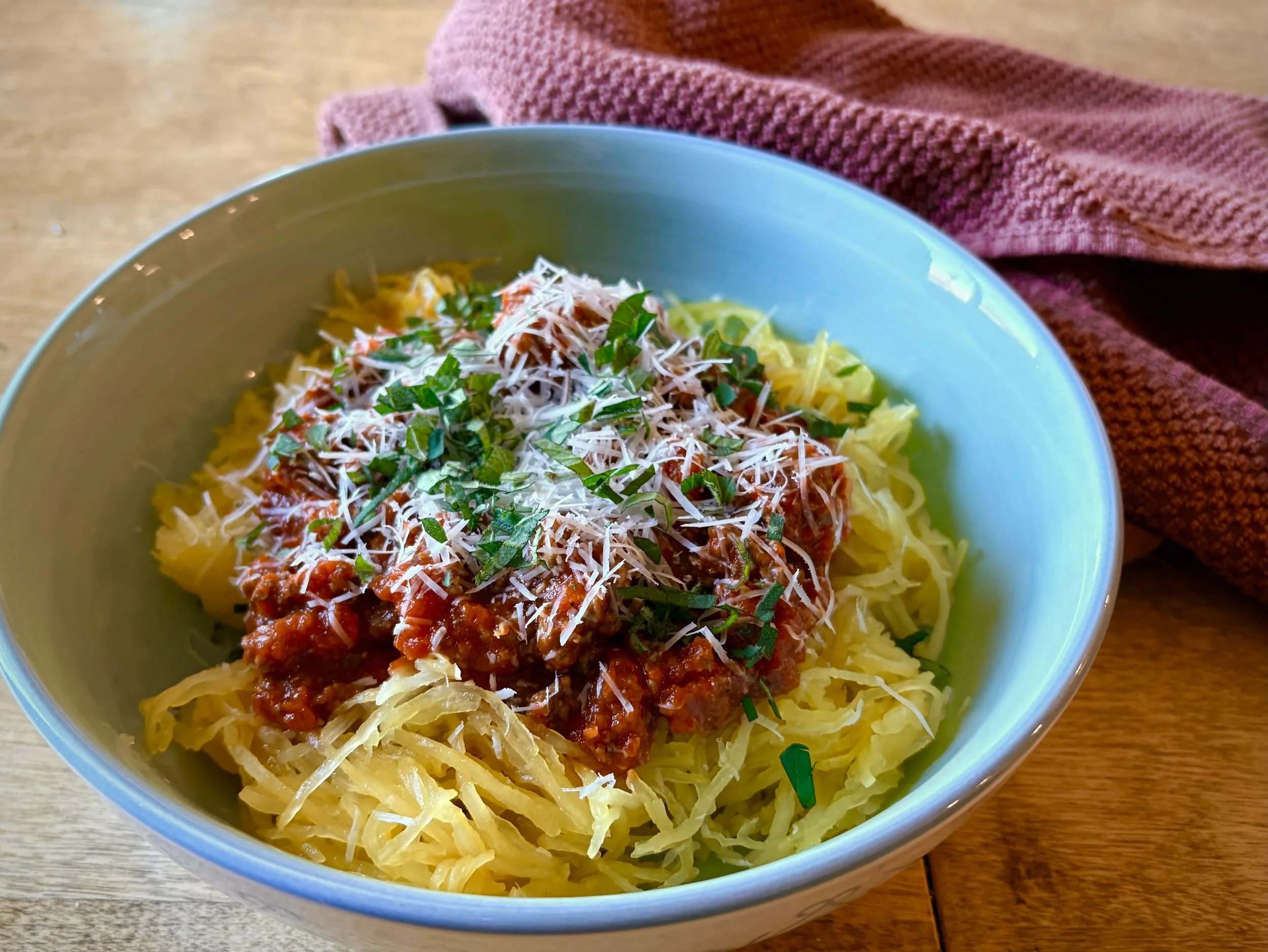
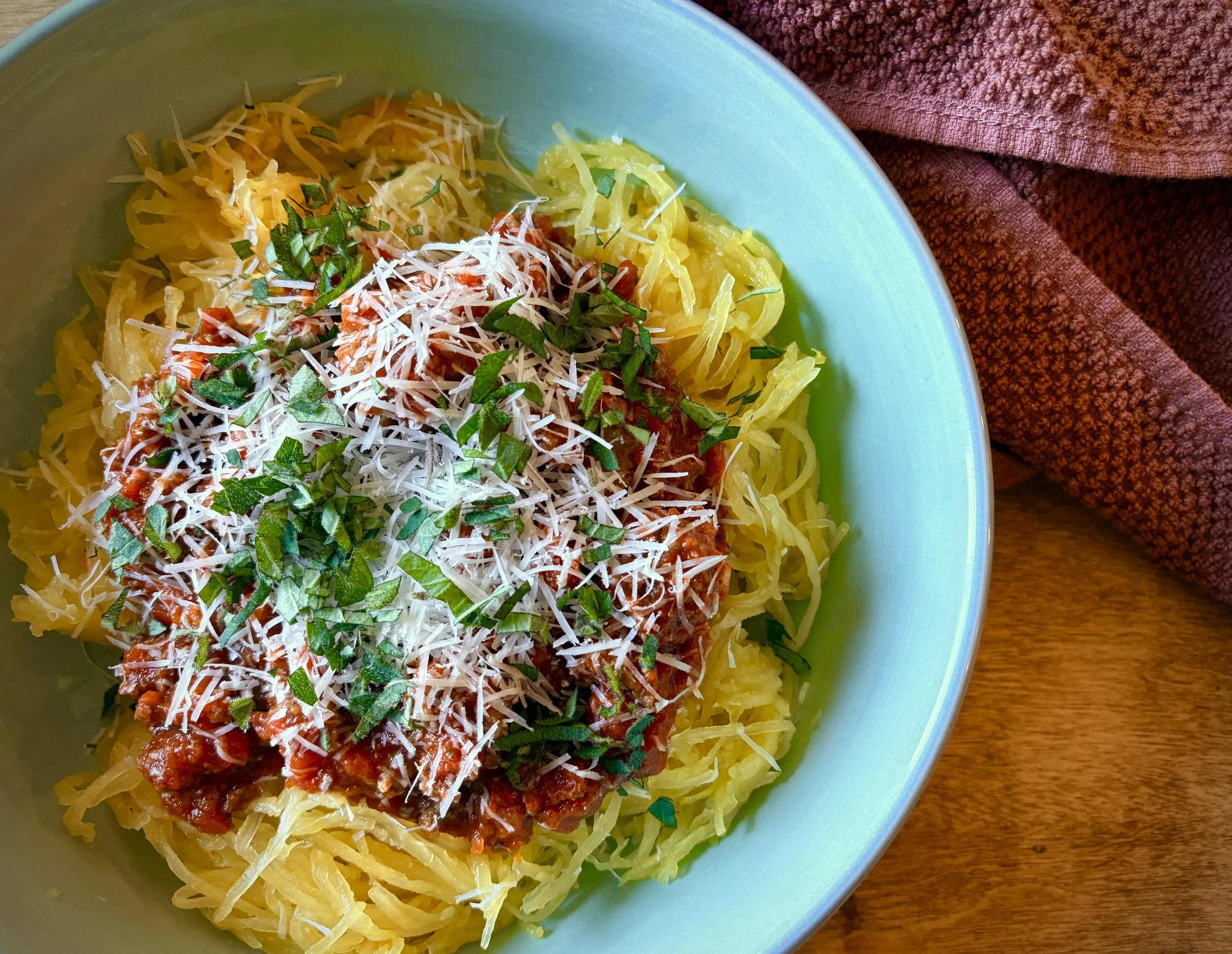
The Comfort Classic: Mix your squash strands with a low-fat marinara sauce, lean ground Turkey Meatballs, and a sprinkle of real Parmesan cheese.
The Protein Booster: Make this Cottage Cheese Alfredo sauce and add your choice of lean meat along with it.
Quick Baking Tip for Perfect Strands
To avoid watery squash, slice your squash in half lengthwise, scoop out the seeds, and rub lightly with olive oil, salt, and pepper. Roast it cut-side down at 400°F (200°C) for 35-45 minutes. Roasting face-down lets the moisture escape onto the pan and steam to build on the inside, leaving you with firm, pasta-like strands rather than soggy mush.
What You Need
1 medium spaghetti squash
1 tablespoon olive oil
Salt and black pepper to taste
Baking sheet
Parchment paper
Sharp knife
Spoon
Fork
Step 1: Prep and Soften the Squash
Preheat your oven to 400°F.
Line a baking sheet with parchment paper.
If you can, poke a few holes into the skin.
Microwave the squash for 3 to 5 minutes if the skin feels too hard to cut safely.
Step 2: Cut and Clean
Place the squash on a stable cutting board.
Slice the squash carefully in half lengthwise. I sometimes slice the ends off so that I can create a flat surce on the squash for support.
Scoop out the seeds and stringy pulp with a spoon.
Step 3: Season and Roast
Brush or drizzle the inside of each half lightly with olive oil.
Sprinkle a small pinch of salt and pepper over the flesh.
Place the squash halves cut-side down on your prepared baking sheet. (Baking face-down traps a little steam and prevents the strands from drying out.)
Bake for 35 to 45 minutes, depending on the size of your squash.
Step 4: Test and Shred
Check for doneness by pressing a fork into the skin. The flesh should be tender.
Drag a fork across the inside flesh. The squash will naturally pull apart into long, spaghetti-like strands.
Fluff the strands and serve warm with your favorite method.
I sure hope you give this meal volumizing hack a try. Happy cooking and enjoy!