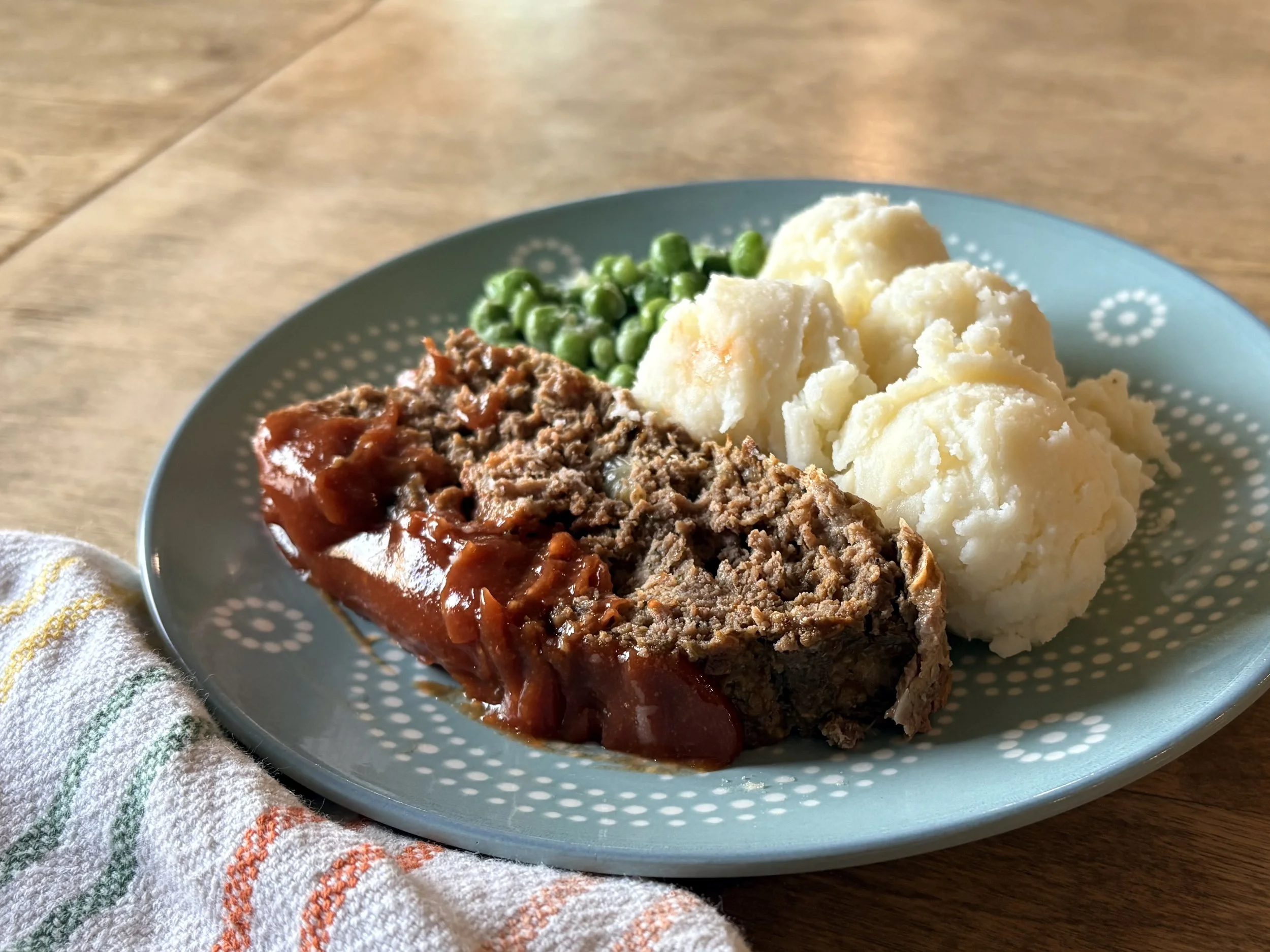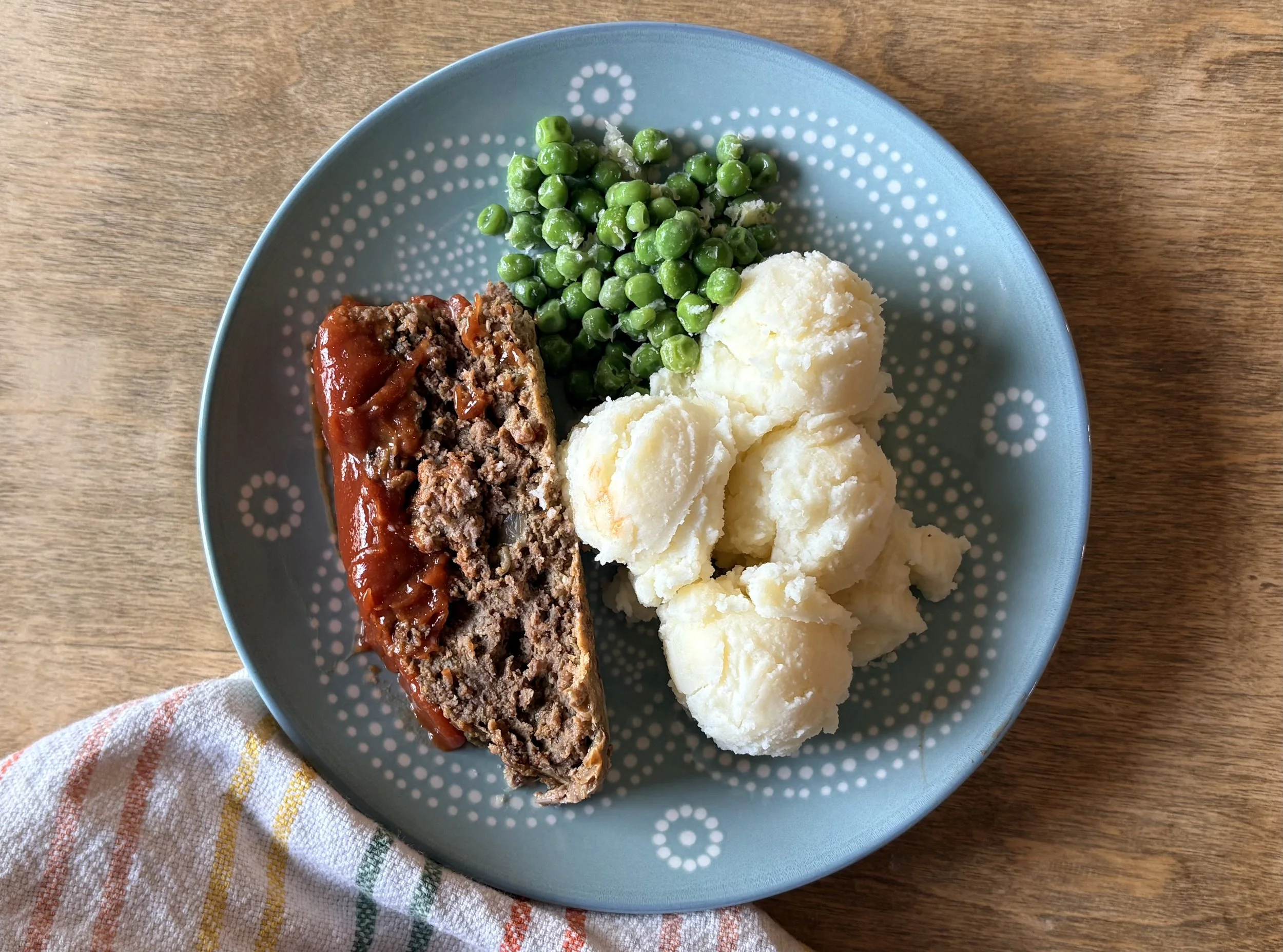
Growing up, there were certain dinners that just felt like home. Classic meatloaf and mashed potatoes with peas on the side was one of them. The front door would swing open, and you’d instantly be hit by that rich, unmistakable aroma of garlic, onions, and sweet ketchup wafting from the kitchen. It meant the day was winding down, a comforting family meal was on the table, and everything was right with the world.
For years, I thought making that perfect, juicy meatloaf required a mountain of traditional breadcrumbs. But when I set out to create a version that everyone at the table could enjoy, I discovered a secret: oat flour. Not only does it make this recipe naturally gluten-free, but it actually keeps the meat incredibly tender and moist without making it heavy. Pair that with a sticky, sweet honey-ketchup glaze, and you have a modern spin on a timeless classic that will disappear from plates in minutes. My family gobbles this up so I started making this large double batch size in order to have some left overs.
Whether you are cooking for a busy weeknight or recreating your own cozy Sunday family dinner, this foolproof recipe guarantees a perfect slice every single time.
The Ingredient Lineup
For the Meatloaf Mixture:
2 lbs ground beef (85% lean)
1 cup onion, finely chopped
1 tsp olive oil (or cooking spray for sautéing)
3 large eggs
3 garlic cloves, minced
2 tbsp ketchup
3 tbsp fresh parsley, finely chopped
¾ cup oat flour (a fantastic gluten-free alternative to breadcrumbs!)
⅓ cup milk
2 tsp salt (adjust to your preference)
1 tsp Italian seasoning (or a mix of dried basil and oregano)
½ tsp ground black pepper
For the Sticky Sweet Glaze:
¾ cup ketchup
1 ½ tsp white vinegar (I use a white balsamic vinegar)
2 tbsp honey or maple syrup
½ tsp garlic powder
½ tsp onion powder
Instructions
1. Prep Your Station
Preheat your oven to 350°F (175°C). Line a rimmed baking sheet with parchment paper for effortless cleanup and to prevent sticking. (Alternatively, you can lightly grease two standard loaf pans—see our debate below on which method is best!)
2. Sauté the Onions
Heat a skillet over medium heat and add 1 tsp of olive oil or cooking spray. Toss in your chopped onions and sauté, stirring occasionally, for about 5 minutes until they are soft and translucent. Turn off the heat and let them cool completely.
3. Mix the Meat
In a large mixing bowl, combine the ground beef, sautéed onions, eggs, minced garlic, ketchup, parsley, oat flour, milk, salt, Italian seasoning, and black pepper. Mix with your hands or a spoon just until combined. Tip: Over-mixing can make the meatloaf dense and tough, so keep it light!
4. Shape and First Bake
Transfer the mixture onto your prepared baking sheet. Shape it free-form into a loaf that is roughly 8 inches long, 4 inches wide, and 3 inches tall. Pop it into the oven uncovered and bake at 350°F for 40 minutes.
5. Whisk the Sauce
While the meatloaf is doing its first bake, whisk together the ketchup, white vinegar, honey (or maple syrup), garlic powder, and onion powder in a small bowl until smooth.
6. Glaze and Finish
Carefully remove the meatloaf from the oven. Spread your prepared glaze generously over the top and sides. Return it to the oven for an additional 20 minutes, or until a meat thermometer reads an internal temperature of 160°F.
7. Rest and Slice
Resist the temptation to cut into it immediately! Let the meatloaf rest for 10–15 minutes before slicing. This locks in the juices and keeps the slices from falling apart.
Baking Sheet vs. Loaf Pan: The Great Debate
Molding meatloaf free-form onto a baking sheet is generally considered better because it creates a crisp, browned crust on all sides and lets excess fat drain away.
Baking Sheet (Free-Form):
Better crust: Exposes more surface area to direct oven heat for a caramelized exterior.
Less grease: Fat drains away from the meat instead of pooling around it inside of the loaf pan.
Faster cooking: Flatter shapes cook more quickly and evenly.
Pro-Tip for Baking Sheet goers: To keep your meatloaf from looking messy or unappetizing when using the baking sheet method, you need to control where the juices flow. When meat juices and fat pool on a flat sheet, they create a gray, boiled-looking film around the base that ruins the aesthetic.
The "sheet pan + wire rack" trick
This is the ultimate method for a clean look.
Place a oven-safe wire cooling rack directly inside your rimmed baking sheet.
Lay a sheet of parchment paper over the rack, and poke 10 to 12 small holes through the parchment using a skewer or fork.
Form your meatloaf on top of the parchment. As the meat bakes, all the excess grease and cloudy fluids will drain straight through the holes and drop into the pan below, leaving your meatloaf perfectly clean, dry, and ready for a beautiful glaze.
Loaf Pan:
More Moisture: Traps juices so the meat stays very tender, though it can feel slightly steamed.
Traditional shape: Keeps a neat, tall loaf look, but can result in a greasy texture if using higher-fat beef.
Pro-Tip for Loaf Pan Lovers:
If you prefer the neat, tall look of a traditional loaf pan, use a leaner cut of beef.
Midway through the baking process, carefully spoon or pour off any liquid pooling in the corners of the pan to help a proper top crust form!
Recipe Notes & Variations
Make it Dairy-Free: Simply swap the ⅓ cup of regular milk for your favorite unsweetened dairy-free milk (like almond or oat milk).
Oat Flour Secret: If you don't have oat flour on hand, just throw some rolled oats into a blender or food processor for a few pulses until they turn into a fine powder!
What to Serve With It: The Perfect Plate
To build the ultimate comfort food plate, pair a thick slice of this meatloaf with these two classic sides:
Mashed Potatoes: A velvety bed of mashed potatoes is the ultimate partner for meatloaf. Make a little well in the center of your scoop so it can catch any of that extra sweet honey-ketchup glaze running off the meat.
Buttery Sweet Peas: A side of bright, vibrant sweet peas adds the perfect pop of color to the plate. Toss them with a tiny pat of butter and a pinch of salt to balance out the rich, savory flavors of the beef.