
For many of us, the sizzle of sausage in a morning skillet or browned and stirred into a delicious soup is the ultimate comfort food. But over the last decade, a growing mountain of health warnings has cast a shadow over these processed favorites.
When the World Health Organization (WHO) classified processed meats as a direct contributor to colon cancer, it left many food lovers asking: Do I have to give up these packed-in flavors completely to protect my health?
The short answer is no. By understanding exactly what makes industrial sausage and other processed meats risky, you can learn to smartly shop the supermarket and recreate those bold, nostalgic flavors right in your own kitchen—whether choosing better-vetted commercial alternatives or making your own—with zero compromise to your health.
Here is a deeper dive into the science behind the warnings, how to spot hidden ingredients on store shelves, and a simple blueprint for making gourmet sausage at home.
Why Processed Meat is Linked to Colon Cancer
In 2015, the International Agency for Research on Cancer (IARC)—the specialized cancer agency of the WHO—classified processed meat as a Group 1 carcinogen. This is the same classification given to tobacco smoking and asbestos. It doesn’t mean eating a hot dog is as dangerous as smoking a cigarette, but it means the evidence establishing that processed meat causes cancer is just as definitive.
According to a comprehensive evaluation published by the World Health Organization, eating just 50 grams of processed meat daily—equivalent to about one hot dog or two small links of sausage—increases the relative risk of developing colorectal cancer by 18%.
But what is actually happening with these meats to cause this? What makes them different? The danger arises primarily from three distinct factors.
Nitrites, Nitrates, and N-Nitroso Compounds
To extend shelf life and maintain an appealing pink color, industrial manufacturers add sodium nitrites or nitrates. During digestion, or when exposed to the high heat of a frying pan, these compounds interact with natural proteins to form N-nitroso compounds (NOCs). NOCs are highly potent carcinogens known to damage the delicate DNA lining of the colon, which is what can trigger cancerous mutations.
The Hidden Trap of "Heme Iron"
Red meats (like beef and pork) are naturally high in heme iron. While iron is an essential nutrient, heme iron acts as a catalyst in the gut. It stimulates the production of those toxic N-nitroso compounds and causes oxidative stress, irritating and inflaming the colorectal walls over time.
Cooking Byproducts (HCAs and PAHs)
Sausages are notoriously prone to charring. When meat is cooked over an open flame or at high temperatures, fat drips onto the heat source, creating smoke that deposits Polycyclic Aromatic Hydrocarbons (PAHs) onto the surface. Simultaneously, high heat causes amino acids and creatine in the meat to react, forming Heterocyclic Amines (HCAs). Both chemical groups are heavily linked to increased cancer risks.
Decoding the Deceptive Labels at the Grocery Store
To protect your health, you must learn to read past the front-of-package marketing and look directly at the ingredient panel.
The "No Nitrates Added" Celery Powder Deception
One of the most common traps on modern grocery shelves is a package boasting "All-Natural: No Nitrates or Nitrites Added."
If you flip the package over, you will almost always find celery powder or celery juice concentrate listed in the ingredients. Chemically, celery is naturally packed with nitrates. When manufacturers mix celery powder with bacterial cultures and add it to meat, it undergoes the exact same biochemical reaction as synthetic curing salts. Your stomach cannot tell the difference between "natural" celery nitrates and laboratory-made sodium nitrite—both form the identical cancer-causing N-nitroso compounds in your body.
What to Look for Instead
If you buy store-bought sausage, apply these parameters:
The Short List: The ingredient list should be brief, starting with an antibiotic-free protein and followed strictly by water, vinegar, and whole spices.
Zero Fillers: Avoid brands listing corn syrup, dextrose, modified food starch, or hydrolyzed soy protein, which are used to salvage texture when high-fat pork is stripped away.
Convenience Without the Compromise: Healthier Store-Bought Brands
If you don't have the time to whip up a homemade batch from scratch, you can still drastically minimize your exposure to heavy saturated fats, synthetic binders, and chemical preservatives. While any pre-packaged sausage almost always should be consumed in moderation these favored brands offer significantly cleaner profiles:
Amylu Foods: Widely celebrated for their high-quality chicken sausages, Amylu uses antibiotic-free chicken to create high-protein, low-saturated-fat links. Crucially, they offer several completely celery-free, Paleo, and Whole30-approved options (like their Andouille Chicken Sausage and Breakfast Bites) that rely entirely on real vinegar and kitchen spices for preservation.
Applegate Naturals: This brand is highly transparent, ensuring their chicken and turkey links feature very short, clean ingredient lists. They are completely free of artificial ingredients and chemical preservatives.
Pederson's Natural Farms: An exceptional choice if you prefer traditional pork or beef but want to avoid the chemical baggage. They specialize in humanely raised, sugar-free, and uncured options completely free of MSG and artificial enhancers.
Al Fresco: A highly accessible national brand crafting all-natural chicken sausages. They cut down on excessive fat and chemical fillers by flavoring their links with real fruits, gourmet cheeses, and fresh green herbs.
The Ultimate "Clean-Label" Homemade Sausage Blueprint
When you do have a few extra minutes, taking control of the ingredients yourself is the gold standard. Making homemade sausage doesn’t require a meat grinder, complicated casings, or days of curing. By mixing fresh herbs with lean ground poultry, you can recreate the iconic texture and taste in under 10 minutes.
The Secrets to Recreating the "Sausage Experience" Healthily
The Base: Use 93% Lean Ground Turkey or Ground Chicken. Do not buy 99% fat-free breast meat, as it lacks the texture needed to hold spices and will dry out instantly on the stove.
The Fat Illusion: Traditional sausage is juicy because it is loaded with saturated pork fat. To mimic this mouthfeel without the health consequences, mix 1 tablespoon of heart-healthy extra virgin olive oil and 2 tablespoons of unsweetened applesauce into every pound of meat. The applesauce completely dissolves during cooking, but its natural pectin keeps the poultry incredibly tender and moist.
The Extraction Window: Commercial sausage tastes "packed-in" because the spices cure into the meat over time. To achieve this at home, always let your spiced meat rest in the refrigerator for at least 30 minutes (or overnight) before cooking. This allows the dried herbs to rehydrate and deeply infuse the protein fibers.
Master Recipes: Three Flavor Profiles, One Simple Base
Prep Time: 10 minutes
Chilling Time: 30 minutes
Yield: 1 lb of sausage meat (4–6 servings)
The Ground Foundation
In a large bowl, combine:
1 lb Lean Ground Turkey or Chicken (93/7)
1 tbsp Extra Virgin Olive Oil
2 tbsp Unsweetened Applesauce
Choose one of the gourmet spice profiles below to blend into your foundation:
Option 1: Classic Sweet Italian
Perfect for pasta sauces, healthy pizza toppings, or browning with peppers and onions.
1.5 tsp Fennel Seeds (Crucial: Crush them slightly between your fingers to release the aromatic oils)
1 tbsp Garlic Powder
1 tbsp Onion Powder
1 tbsp Dried Oregano
1 tsp Smoked Paprika
0.5 tsp Kosher Salt
0.5 tsp Black Pepper
0.25 tsp Red Pepper Flakes (Optional, for heat)
Option 2: Heritage Breakfast Style
The ultimate morning comfort flavor, designed to accompany eggs or whole-grain toast.
2 tsp Rubbed Sage
1 tsp Dried Thyme
0.5 tsp Ground Nutmeg
1 tsp Pure Maple Syrup (Just a hint for traditional breakfast sweetness)
0.5 tsp Kosher Salt
0.5 tsp Smoked Black Pepper
Option 3: Smoky Chorizo / Cajun
Bold, earthy, and fiery. Excellent for breakfast scrambles, shakshuka, or healthy grain bowls.
1 tbsp Smoked Paprika
1.5 tsp Ground Cumin
1 tsp Garlic Powder
1 tsp Onion Powder
0.5 tsp Dried Oregano
0.5 tsp Cayenne Pepper (Adjust to your spice tolerance)
0.5 tsp Kosher Salt
Cooking Instructions
Incorporate: Sprinkle your chosen spice blend evenly over the meat foundation. Using a fork or clean hands, mix gently until just combined. Do not over-knead, or the texture will become tough.
Chill: Cover and refrigerate for 30 minutes to let the flavors lock in.
Sauté or Form:
For Patties: Form into thin round discs. Cook in a skillet over medium heat for 4–5 minutes per side until the internal temperature hits a safe 165°F.
For Crumbles: Heat a dry skillet over medium-high, add the meat mixture, and break it apart with a wooden spoon as it browns.
How the Options Stack Up: A Metric Comparison
To see exactly how making this quick switch impacts your daily nutrition, look at how a standard 3-ounce serving of homemade turkey sausage compares to both traditional store-bought pork sausage and a premium, clean-label chicken sausage brand like Amylu:
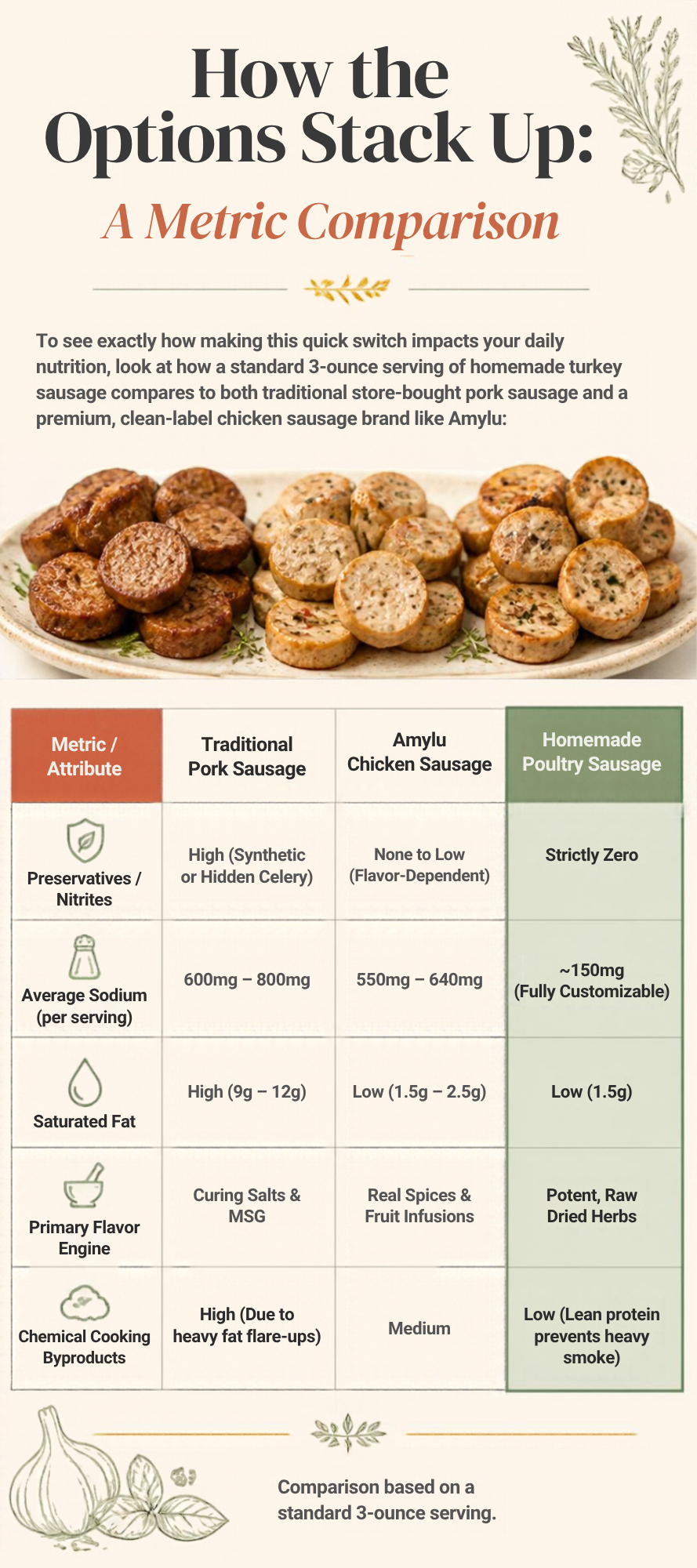
*Comparing traditional pork sausage, a healthier brand option and homemade recipe.
Final Thoughts
Prioritizing your health doesn’t mean your meals have to become bland. The distinct, craveable flavor of sausage never actually belonged to the factory chemicals or the intestinal casings—it belongs to those beautiful aromatic seasonings. By leveraging transparent brands at the store or blending those exact aromatics into fresh, lean proteins at home, you get all of the culinary joy with none of the long-term risk.